Getting into rhythm
Our understanding of and approach to AFib management
is constantly evolving. Explore this dynamic field more.
Test your
knowledge of AFib
knowledge of AFib
Why staying
on beat is key
on beat is key
Scan QR code

Keeping a finger on
the pulse of rhythm
management in AFib
the pulse of rhythm
management in AFib
Scan QR code

Does early rhythm
control reduce CV
risks vs usual care?
control reduce CV
risks vs usual care?
Scan QR code

Question 1 (of 3)
True or False?
According to the 2014 AHA/ACC/HRS guidelines for management of AFib,
several considerations favor pursuing a rhythm-control strategy including,
but not limited to, a younger patient age and first episode of AFib.
several considerations favor pursuing a rhythm-control strategy including,
but not limited to, a younger patient age and first episode of AFib.
Correct!
Incorrect
The answer is: True!
According to the 2014 AHA/ACC/HRS guidelines for management of AFib, persistent symptoms
associated with AFib remain the most compelling indication for a rhythm-control strategy. Other
factors that may favor attempts at rhythm control include difficulty in achieving adequate rate control,
younger patient age, tachycardia-mediated cardiomyopathy, first episode of AFib, AFib precipitated by
an acute illness, and patient preference.
associated with AFib remain the most compelling indication for a rhythm-control strategy. Other
factors that may favor attempts at rhythm control include difficulty in achieving adequate rate control,
younger patient age, tachycardia-mediated cardiomyopathy, first episode of AFib, AFib precipitated by
an acute illness, and patient preference.
January CT, et al. Circulation. 2014;130:2071-104.
Download tx
recommendations
infographic
recommendations
infographic
Question 2 (of 3)
True or False?
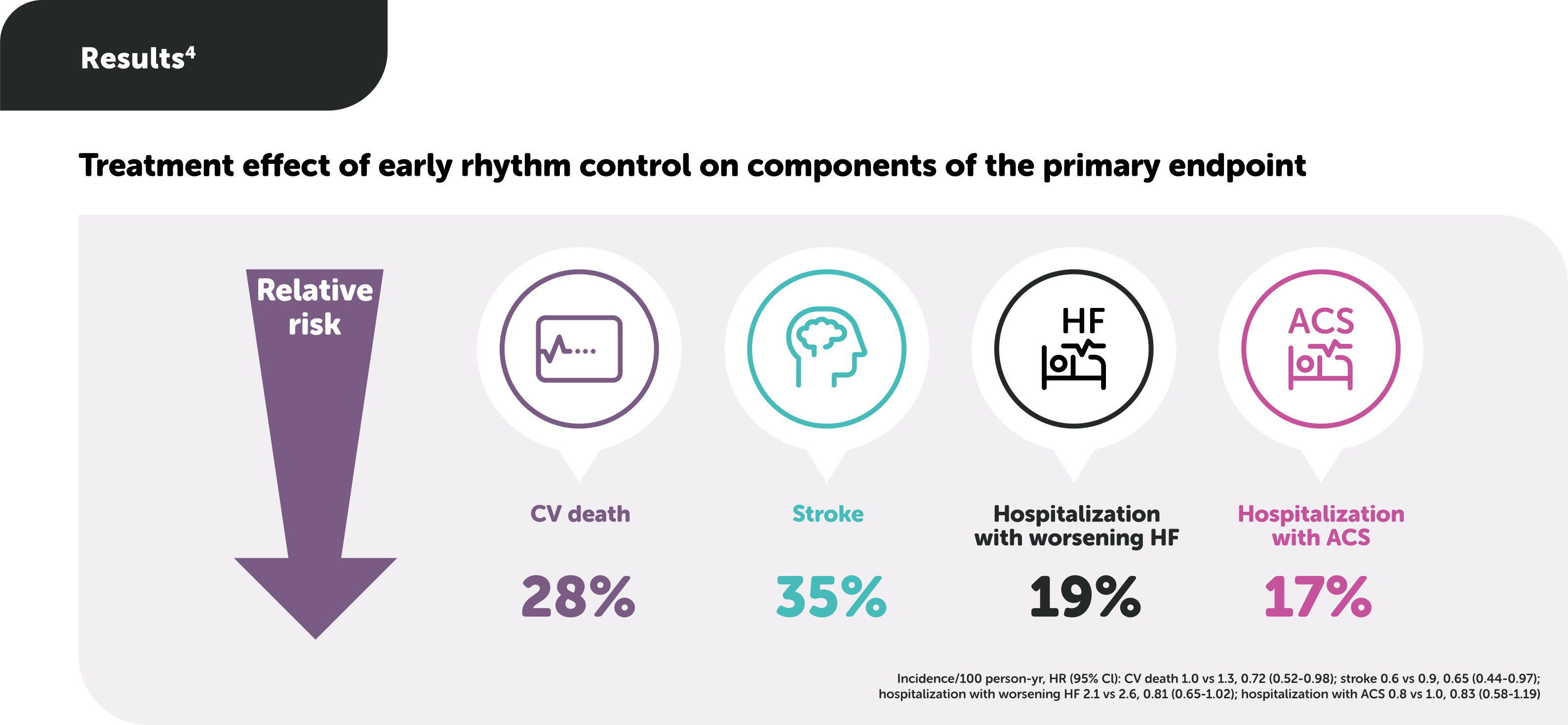
The positive clinical outcomes of the EAST AFNET-4 trial assessing early rhythm
control vs usual care (composite of death from cardiovascular causes, stroke
[ischemic or hemorrhagic], or hospitalization with worsening of heart failure or
acute coronary syndrome) were primarily driven by ablation.
control vs usual care (composite of death from cardiovascular causes, stroke
[ischemic or hemorrhagic], or hospitalization with worsening of heart failure or
acute coronary syndrome) were primarily driven by ablation.
Correct!
Incorrect
The answer is: False!
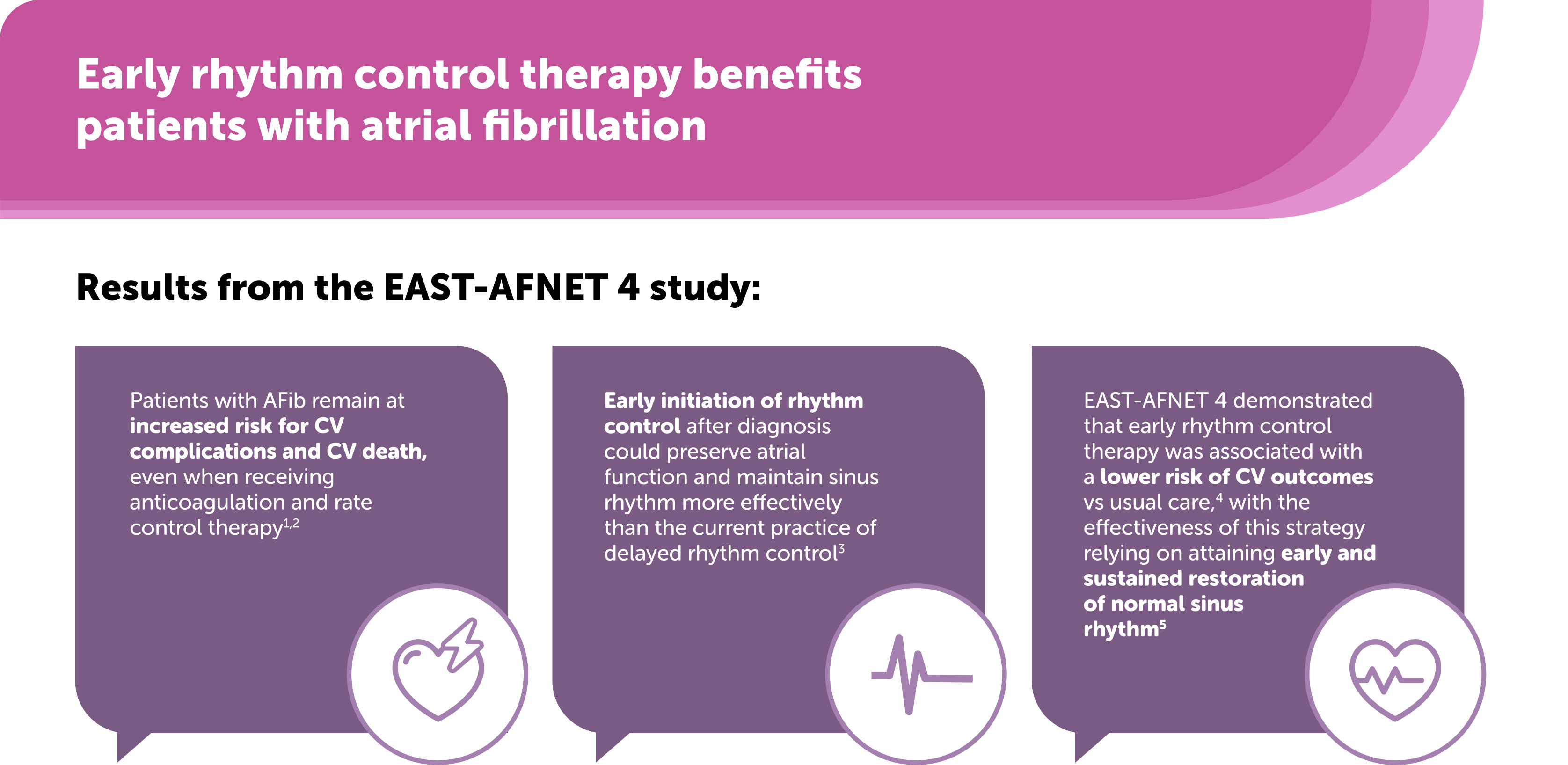
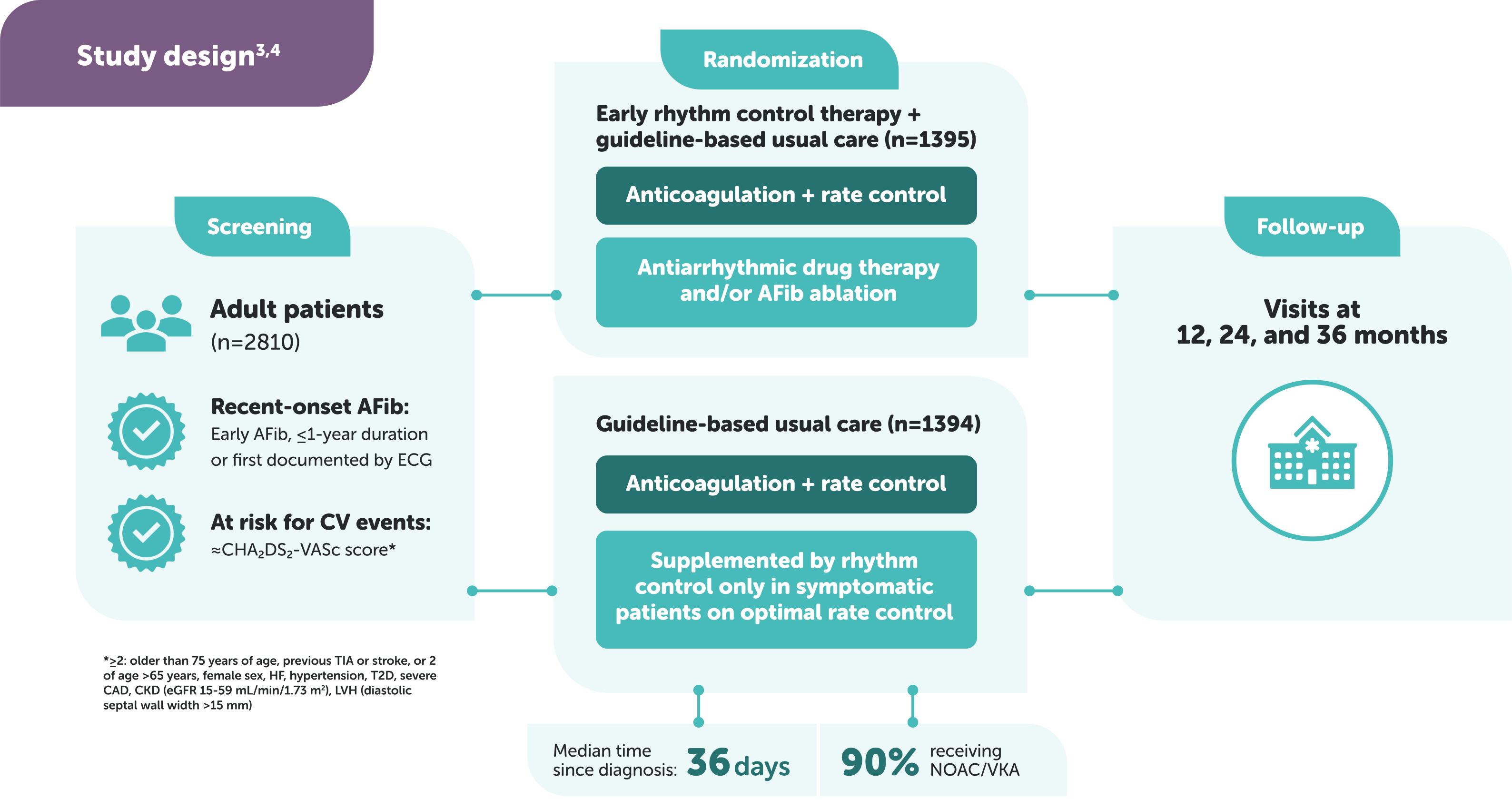
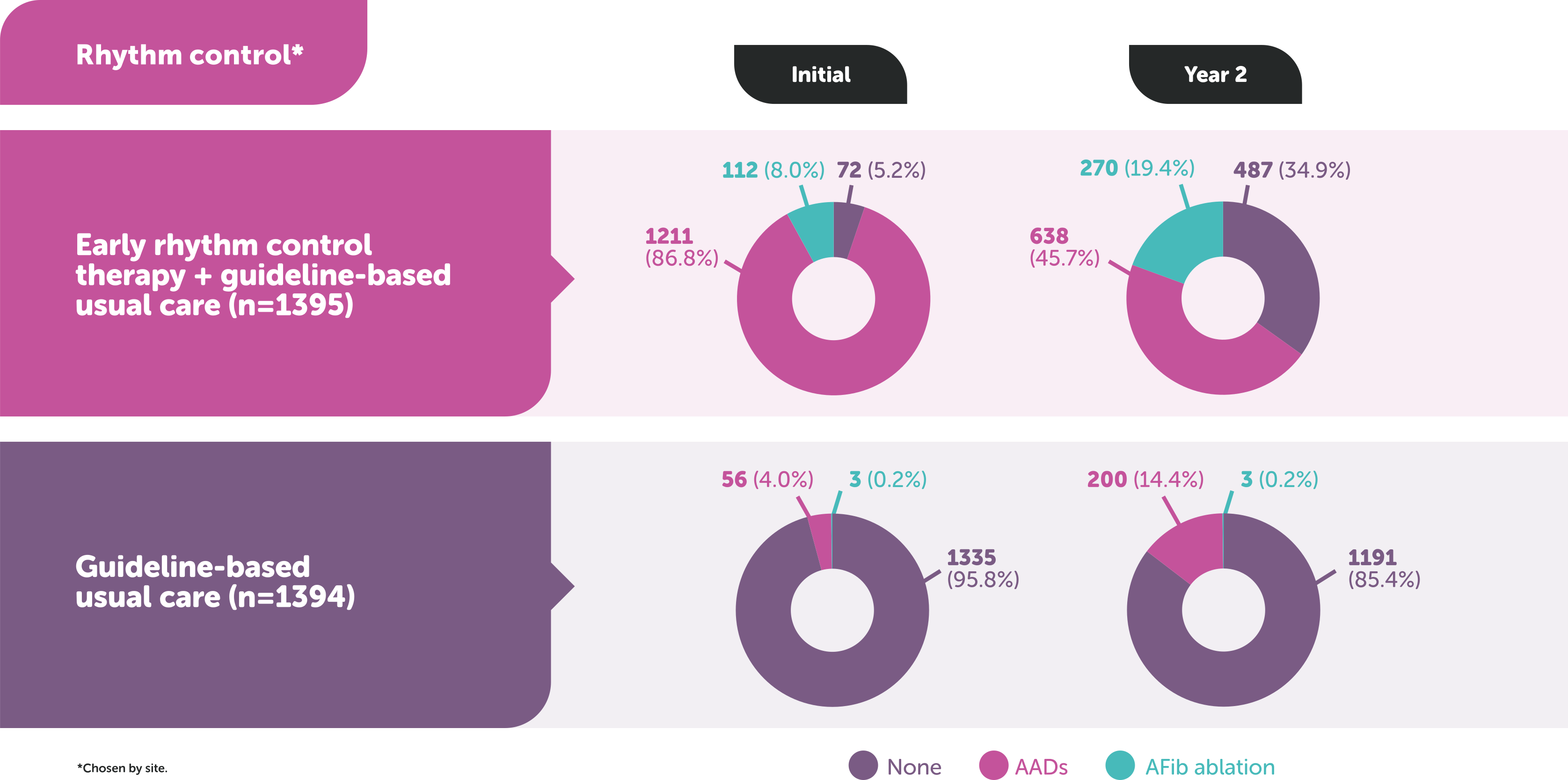
The majority of participants in the EAST-AFNET 4 trial who were assigned to early rhythm control (ERC)
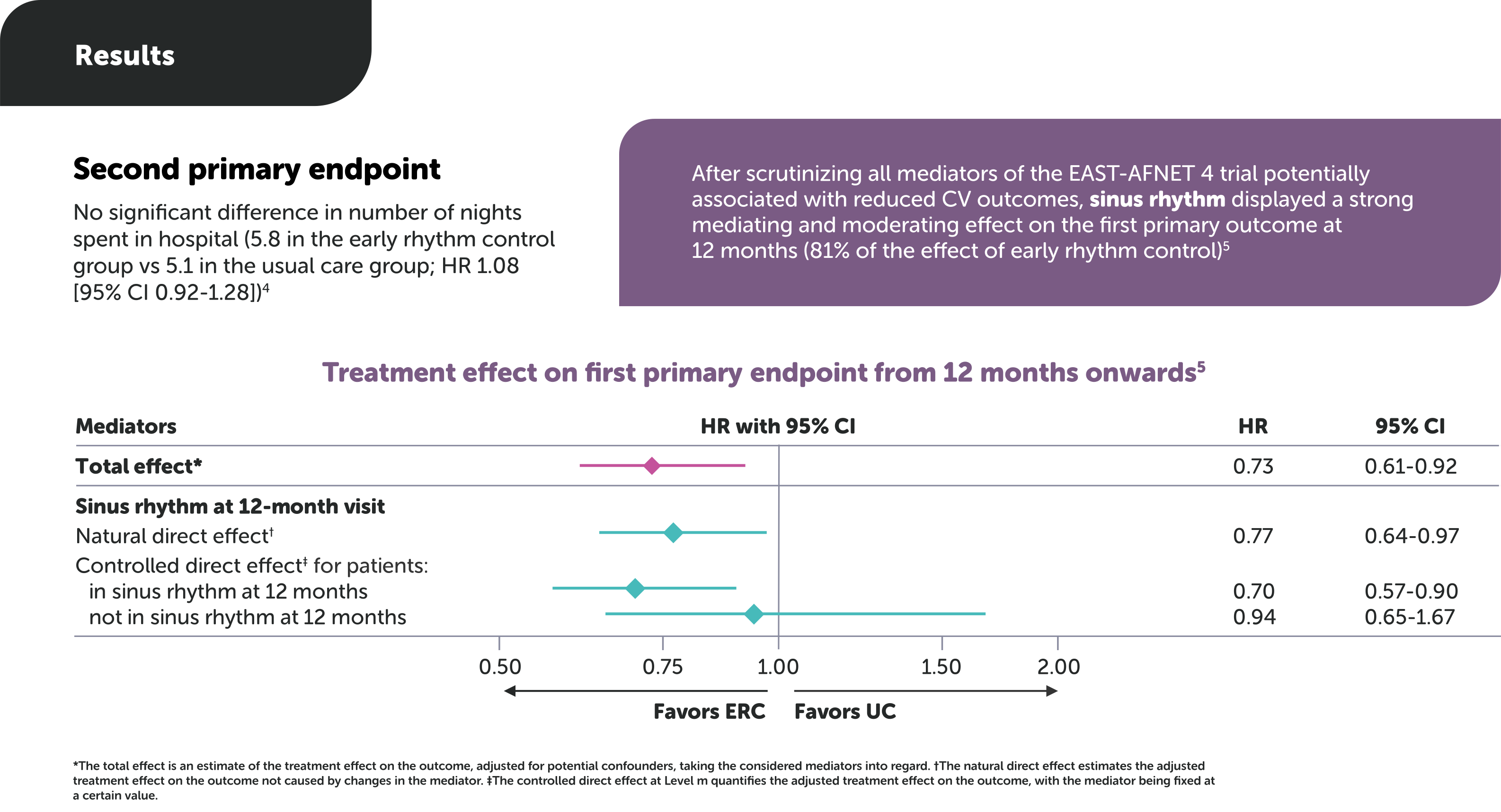
received antiarrhythmic drugs (86.8%).1 After scrutinizing all mediators of the EAST-AFNET 4 trial
potentially associated with reduced cardiovascular outcomes, sinus rhythm displayed a strong mediating and
moderating effect on the first primary outcome at 12 months (81% of the effect of ERC).2
received antiarrhythmic drugs (86.8%).1 After scrutinizing all mediators of the EAST-AFNET 4 trial
potentially associated with reduced cardiovascular outcomes, sinus rhythm displayed a strong mediating and
moderating effect on the first primary outcome at 12 months (81% of the effect of ERC).2
1. Kirchhof P, et al. N Engl J Med. 2020;383:1305-1316.
2. Eckardt L, et al. Eur Heart J. 2022;43:4127–44.
2. Eckardt L, et al. Eur Heart J. 2022;43:4127–44.
Question 3 (of 3)
True or False?
Data from clinical trials support the use of a rhythm control strategy
in first detected AFib.
in first detected AFib.
Correct!
Incorrect
The answer is: False!
The clinical trial data we have currently do not specifically address rhythm management in first
detected AFib. CHANGE AFib will be the first trial to assess this.
detected AFib. CHANGE AFib will be the first trial to assess this.
Early Dronedarone Versus Usual Care to Improve Outcomes in Persons With Newly Diagnosed Atrial Fibrillation (CHANGE-AFIB). NCT05130268.
https://clinicaltrials.gov/ct2/show/NCT05130268. Accessed December 19, 2022.
https://clinicaltrials.gov/ct2/show/NCT05130268. Accessed December 19, 2022.
Download
CHANGE AFib
infographic
CHANGE AFib
infographic
Scan
to download
to download
References
2014 AHA/ACC/HRS guidelines1
- Initial rate-control strategy reasonable
for many patients. Persistent symptoms
– most compelling indication for a
rhythm control strategy. - Routine use of rhythm control suggested
for select patients. - ERC cited as possible beneficial
strategy to prevent AFib progression.
2019 AHA/ACC/HRS focused update2
- Algorithm for using AADs/ablation for
rhythm management remained unchanged
from the 2014 guidelines. - Rhythm control recommendations edited to
include TE prevention using cardioversion. - New IIb recommendation added to further
support AFib catheter ablation.
2020 ESC guidelines3
- ABC pathway proposed for integrated AFib care.
- Symptom control with rate or rhythm control.
- Rhythm control recommended for improvement
in symptoms and QoL. - Rate control remained an integral part of AFib
management, often being sufficient to improve
AFib-related symptoms.
2022 AFNET/EHRA consensus conference4
- Emphasized better rhythm management within the
ABC pathway, focusing on reduction of adverse
outcomes and improving symptoms and QoL. - Recommendations include ERC for new AFib, and
rate control and AV-nodal therapy when rhythm
control is difficult to achieve.
The future
- The self-perpetuation of AFib
through atrial structural remodeling
warrants early AFib treatment to
limit progression, improve
outcomes, and help maintain NSR. - Current clinical practice and
guidelines do not yet fully reflect
this change. However, US guideline
updates, expected in 2023/24, may
confirm this paradigm shift.
Scan to
download
download
Scan to
download
download